

Chiropractic vs Physical Therapy: What Is the Difference and Which Do You Need?
Your back hurts. Your neck feels locked. Maybe your legs tingle when you sit too long. Someone tells you to see a chiropractor. Someone else says a physical therapist would help more. Now you’re stuck wondering which one you actually need.
You’re not alone. The difference between chiropractic vs physical therapy confuses most people across Greater Milwaukee and all of Wisconsin. Both professionals treat pain without drugs or surgery. Both hold doctoral-level degrees. Also, Both use hands-on techniques. Yet they take very different approaches to getting you better.
This guide breaks down exactly what each provider does, which conditions respond best to each, and how to decide what’s right for your body. If you’re looking for movement-based chiropractic care that goes beyond the typical adjustment, you’ll want to read every section.
What Does a Chiropractor Actually Do?

A chiropractor is a licensed healthcare provider who focuses on your spine, joints, and nervous system. The core treatment method is the chiropractic adjustment, a controlled, precise movement applied to a joint that isn’t moving correctly.
When your spine shifts out of proper alignment, it can press on nerves. That pressure causes pain, stiffness, and sometimes symptoms you wouldn’t expect, like headaches or tingling in your hands. A chiropractor finds those misalignments and corrects them by hand.
Conditions a Chiropractor Treats
Chiropractic care works best for conditions rooted in joint dysfunction and nerve irritation. These include chronic lower back pain, neck stiffness, sciatica, tension headaches, migraines, herniated discs, whiplash, and pinched nerves.
Most visits take 15 to 30 minutes. Your first appointment usually includes a health history review, a physical exam, and possibly X-rays before any treatment begins.
What Does a Physical Therapist Do?
A physical therapist (often called a PT) specializes in movement and rehabilitation. Their primary goal is restoring your ability to move, bend, lift, and function without pain.
PTs build customized exercise programs that strengthen weak muscles, improve flexibility, and retrain your body’s movement patterns. They also use hands-on techniques like joint mobilization, along with tools such as ultrasound, heat therapy, cold therapy, and electrical stimulation.
Conditions a Physical Therapist Treats
Physical therapy is the strongest option for post-surgical rehabilitation (knee replacement, ACL repair, rotator cuff surgery), sports injuries, stroke recovery, arthritis management, balance disorders, and repetitive strain injuries from work.
Sessions typically run 30 to 60 minutes. Many treatment plans require two to three visits per week over several weeks.
Chiropractic vs Physical Therapy: Side-by-Side Comparison
This table gives you a quick snapshot of how the two compare across the categories that matter most.
| Category | Chiropractic Care | Physical Therapy |
| Primary Focus | Spinal alignment, joint function, nervous system | Movement restoration, strength, rehabilitation |
| Treatment Methods | Manual spinal adjustments, soft tissue work, decompression | Therapeutic exercises, stretching, modalities (heat, e-stim, ultrasound) |
| Typical Session Length | 15 to 30 minutes | 30 to 60 minutes |
| Average Treatment Duration | 4 to 12 weeks | 4 to 16 weeks |
| Best Suited For | Back pain, neck pain, sciatica, headaches, joint misalignment | Post-surgical rehab, sports injuries, stroke recovery, chronic mobility issues |
| Education Required | Doctor of Chiropractic (D.C.) | Doctor of Physical Therapy (DPT) |
| Referral Needed in Wisconsin | No referral required | Direct access with provisions |
| Estimated Cost Per Session (WI) | $30 to $75 without insurance | $75 to $150 without insurance |
Neither option is universally “better.” The right choice depends entirely on what’s causing your pain and what your recovery goals look like.
When Should You See a Chiropractor Instead of a Physical Therapist?
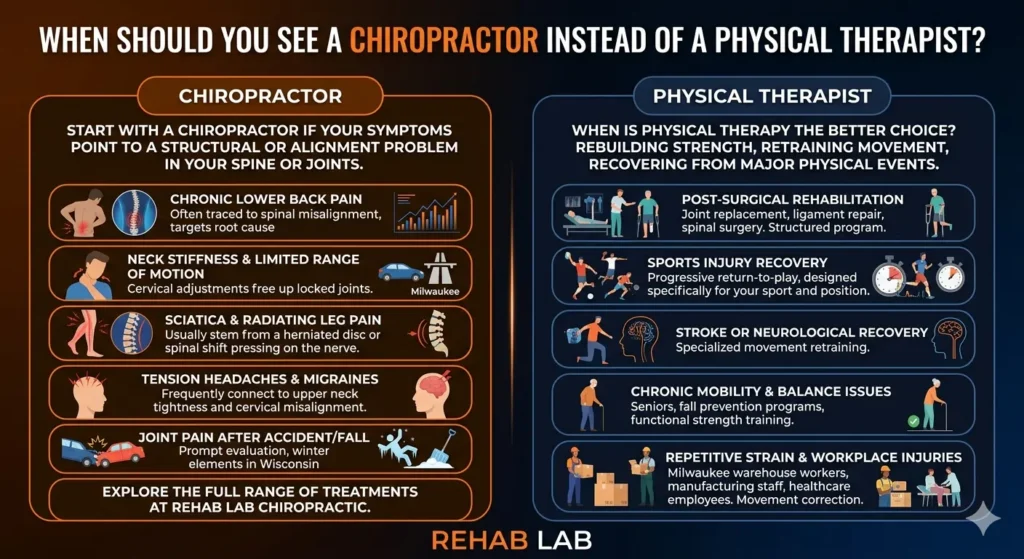
Start with a chiropractor if your symptoms point to a structural or alignment problem in your spine or joints.
Chronic lower back pain that keeps coming back often traces to spinal misalignment. A chiropractor targets the root cause rather than masking symptoms with medication.
Neck stiffness and limited range of motion respond well to cervical adjustments that free up locked joints. Desk workers and commuters who spend long hours on I-94 through Milwaukee deal with this constantly.
Sciatica and radiating leg pain usually stem from a herniated disc or spinal shift pressing on the sciatic nerve. Chiropractic care identifies the exact source of that nerve pressure and works to relieve it.
Tension headaches and migraines frequently connect to tightness in the upper neck and misalignment in the cervical spine. Many patients find relief after just a few adjustments.
Joint pain after a car accident or slip-and-fall needs prompt evaluation. Winter in Wisconsin brings icy sidewalks, snow shoveling injuries, and cold-stiffened joints that respond quickly to chiropractic treatment.
Explore the full range of treatments available at Rehab Lab Chiropractic to see which approach fits your condition.
When Is Physical Therapy the Better Choice?
Choose a physical therapist when your situation calls for rebuilding strength, retraining movement, or recovering from a major physical event.
Post-surgical rehabilitation after joint replacement, ligament repair, or spinal surgery almost always requires a structured PT program to restore function safely.
Sports injury recovery benefits from a progressive return-to-play protocol that a PT designs specifically for your sport and position.
Stroke or neurological condition recovery demands specialized movement retraining that falls squarely within a PT’s scope of practice.
Chronic mobility and balance issues in seniors call for fall prevention programs and functional strength training that PTs deliver best.
Repetitive strain and workplace injuries common among Milwaukee warehouse workers, manufacturing employees, and healthcare staff improve through the movement correction a PT provides.
Can You Use Both Together?
Yes. Combined care often delivers faster, more complete results than either approach alone.
Here’s what an integrated plan might look like: During weeks one through three, chiropractic adjustments reduce pain and restore proper joint alignment. Starting in week two, PT exercises begin strengthening the muscles around the corrected joints. By weeks six through twelve, you shift to maintenance adjustments and independent exercise.
Athletes returning from injury, post-accident patients, and people with chronic pain that plateaus under one type of care all benefit from this combined approach.
What Milwaukee Residents Should Know About Access in Wisconsin
Wisconsin allows you to see a chiropractor without any referral from a doctor. You can call and book directly.
Physical therapy access in Wisconsin works through a “direct access with provisions” model. That means you can see a PT without a referral, but there may be evaluation and treatment limitations depending on your situation.
Most health insurance plans in Wisconsin, including those through major Milwaukee employers, cover both chiropractic and PT. However, copay amounts, session limits, and pre-authorization rules differ by plan. Always verify your benefits before your first visit.
Red Flags: When to Skip Both and See a Doctor Right Away
Some symptoms require immediate medical attention, not conservative care. Head straight to an emergency room or call your primary care physician if you experience any of the following:
Sudden numbness or weakness in your arms or legs. Loss of bladder or bowel control. Severe pain following a high-impact trauma like a car crash or major fall. Unexplained fever combined with back pain. Progressive neurological symptoms that worsen over hours or days.
These could signal conditions like cauda equina syndrome, spinal fracture, or infection that need urgent specialist intervention.
FAQ: Chiropractic vs Physical Therapy
Is a chiropractor or physical therapist better for back pain?
It depends on the cause. Spinal misalignment or nerve compression typically responds best to chiropractic care. Muscle weakness or post-surgical recovery calls for physical therapy. Many patients benefit from both.
Do I need a referral to see a chiropractor in Wisconsin?
No. Wisconsin residents can see a chiropractor without a physician referral.
How many chiropractic sessions does it take to feel better?
Most patients notice improvement within three to six visits. A full treatment plan typically runs six to fifteen sessions over several weeks depending on severity.
Is chiropractic care covered by insurance in Wisconsin?
Most health insurance plans in Wisconsin include chiropractic benefits. Copays and session limits vary by plan. Call your provider or ask the clinic for a benefits check.
Can I see a chiropractor and physical therapist at the same time?
Absolutely. Many patients use both simultaneously for faster recovery. The chiropractor addresses structural alignment while the PT rebuilds strength and mobility.
Find the Right Care for Your Pain in Greater Milwaukee
Choosing between a chiropractor and a physical therapist doesn’t have to feel overwhelming. The right answer starts with understanding what’s causing your pain, and that starts with a proper evaluation.
At Rehab Lab Chiropractic, our team helps patients across Greater Milwaukee figure out exactly what their body needs. No referral required. No guesswork.
Call (920) 533-0771 to schedule your first visit. Let’s find out what’s behind your pain and build a plan that actually fixes it.