
Chiropractic vs Pain Medication in Wisconsin: Which Actually Helps You Recover?
More Wisconsin residents die from opioid overdoses each year than car crashes. In 2022 alone, the state saw over 15,000 opioid-related hospital visits. Those numbers hit close to home for families in Wauwatosa and communities across the Fox Valley.
If you’re dealing with chronic back pain, neck stiffness, or recurring headaches, you’ve probably reached for a bottle of ibuprofen more times than you can count. Maybe a doctor wrote you a prescription. The pain quiets down for a few hours, then comes right back.
That cycle raises a fair question: when it comes to chiropractic vs pain medication, which option actually fixes the problem? This guide breaks down costs, risks, and real outcomes so you can make a confident choice for your body and your budget.
How Pain Medication Works (and Where It Falls Short)
Over-the-counter options like ibuprofen and acetaminophen reduce inflammation and block pain signals. They work. For a rough weekend or a flare-up after yard work, that short-term relief matters.
Prescription opioids go a step further by shutting down pain receptors in the brain. The discomfort disappears, sometimes within minutes. But here’s the catch: none of these drugs correct the structural issue causing your pain. They quiet the alarm without putting out the fire.
Once the dose wears off, the herniated disc, the pinched nerve, or the misaligned vertebra is still there. Often, it’s worse because you moved through your day as if nothing was wrong.
Long-term NSAID use carries its own risks: stomach ulcers, gastrointestinal bleeding, and kidney damage. Opioids bring a heavier toll. The CDC reports that over 2.7 million Americans live with opioid use disorder. In Wisconsin, prescription opioids are involved in roughly 40% of all overdose deaths.
How Chiropractic Care Treats the Source of Your Pain
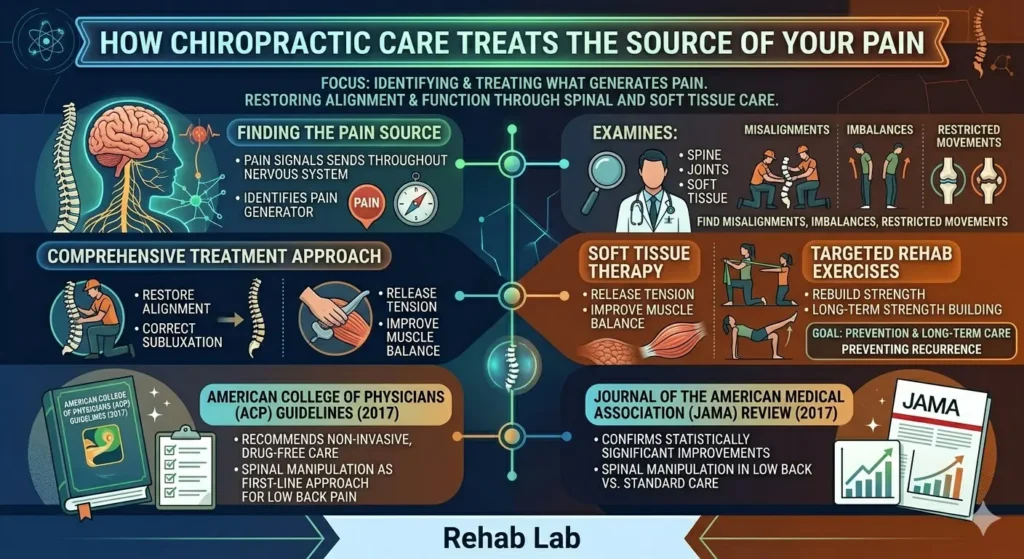
Instead of covering up symptoms, chiropractic care identifies what’s generating the pain in the first place. A chiropractor examines your spine, joints, and soft tissue to find misalignments, muscle imbalances, and restricted movement patterns that send pain signals through your nervous system.
Treatment typically includes spinal adjustments to restore proper alignment, soft tissue therapy to release tension, and targeted rehabilitative exercises that rebuild strength over time. The goal isn’t just pain relief for today. It’s preventing the same problem from returning next month.
The American College of Physicians (ACP) updated its clinical guidelines in 2017 to recommend non-invasive, drug-free treatments like spinal manipulation as a first-line approach for low back pain, before turning to medication.
A review published in the Journal of the American Medical Association (JAMA) the same year confirmed that spinal manipulation produced statistically significant improvements in lower back pain compared to standard medical care.
That’s a meaningful shift. Two of the most respected medical institutions in the country now say: try hands-on treatment before pills.
What It Actually Costs: Chiro vs Pain Meds for Wisconsin Patients
Cost is one of the biggest questions patients in Wauwatosa ask, and it’s the one topic every competing article ignores. Here’s a realistic side-by-side breakdown for Wisconsin residents looking at natural pain relief cost versus medication expenses.
| Treatment Type | Avg. Monthly Cost | Dependency Risk | Long-Term Outcome |
| OTC Pain Meds (ibuprofen, acetaminophen) | $10 – $30 | Low (GI and liver risks with prolonged use) | Symptom management only; no structural correction |
| Prescription Opioids | $30 – $100+ copay (plus ER and follow-up costs) | High (addiction, tolerance escalation) | Temporary relief; condition often worsens over time |
| Chiropractic Care | $50 – $150 per visit | None | Root-cause correction; reduced need for ER visits, surgery, and imaging |
Data from the Workers Compensation Research Institute (WCRI) found that chiropractic-only claims averaged $1,366 per episode, compared to $3,001 or more for patients receiving mixed care. Patients who started with a chiropractor also needed fewer surgeries, fewer ER trips, and fewer specialist referrals downstream.
Most Wisconsin health insurance plans cover chiropractic visits, and many employer-sponsored plans include a set number of sessions per year. If you’re wondering whether paying out-of-pocket for chiropractic is worth it in Wisconsin, the long-term savings on medication refills, imaging, and emergency care often tip the scale.
What the Research Says About Chiropractic vs Opioids Across Wisconsin
Wisconsin’s opioid crisis makes this comparison more than academic. Here’s what five peer-reviewed studies tell us about chiropractic vs opioids for patients right here in Wauwatosa and beyond.
A 2018 study in the Journal of Alternative and Complementary Medicine found that patients receiving chiropractic care were up to 64% less likely to fill an opioid prescription.
A 2022 study published in Chiropractic and Manual Therapies showed that older Medicare beneficiaries who used chiropractic had a 56% lower risk of filling an opioid prescription within one year.
The WCRI (2022) reported that only 1% of patients under exclusive chiropractic supervision were prescribed opioids, compared to 10.3% of those with no chiropractic involvement.
A JAMA review (2017) confirmed that spinal manipulation delivered significant improvements in low back pain compared to standard care.
A 2024 systematic review of 44 studies in Chiropractic and Manual Therapies concluded that patients who consulted a chiropractor first had substantially lower overall healthcare costs, with fewer hospitalizations, injections, and advanced imaging.
For families in Wisconsin dealing with chronic pain, these numbers represent a real alternative to the prescription cycle. Learn more about how Rehab Lab approaches chronic pain differently.
When Chiropractic Care Works Best (and When You Might Still Need Medication)
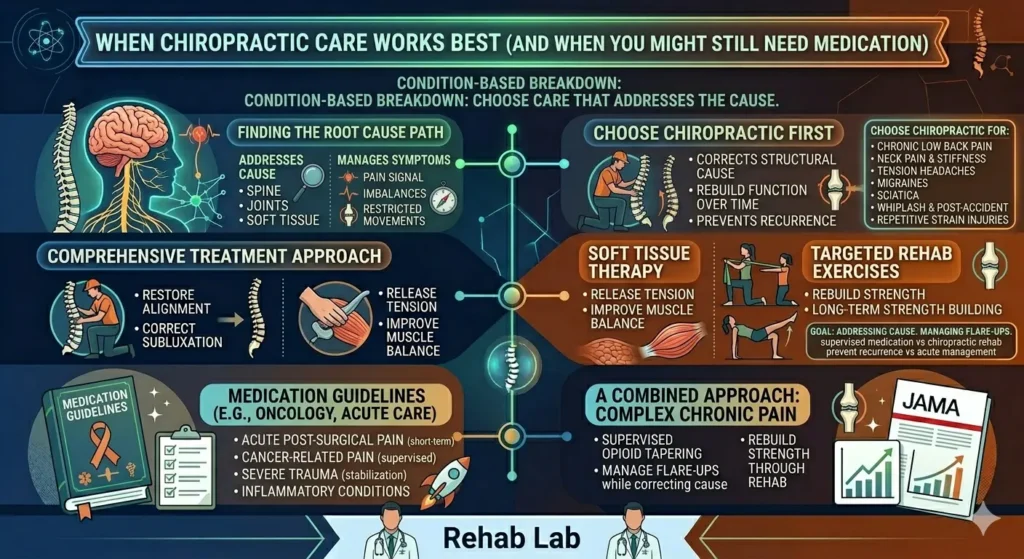
No honest guide pretends one option covers every situation. Here’s a straightforward breakdown based on condition type.
Choose Chiropractic First For:
Chronic low back pain, neck pain and stiffness, tension headaches and migraines, sciatica, whiplash and post-accident recovery, and repetitive strain injuries. These conditions respond well to spinal correction, soft tissue work, and structured rehabilitation.
Medication May Be Appropriate For:
Acute post-surgical pain on a short-term basis, cancer-related pain under oncology supervision, severe trauma requiring immediate stabilization, and inflammatory conditions needing targeted pharmaceutical intervention. In these cases, medication serves a clear clinical purpose.
A Combined Approach Works For:
Complex chronic pain cases where short-term medication manages acute flare-ups while chiropractic corrects the structural cause. This also applies to patients tapering off long-term opioid use under medical supervision while rebuilding strength through chiropractic rehab.
A responsible chiropractor refers patients to medical specialists when the situation calls for it. At Rehab Lab, we work alongside your primary care provider, not against them.
How to Choose the Right Pain Relief Path for Your Situation
If your pain is tied to your back, neck, joints, or posture, and OTC meds haven’t delivered lasting improvement, chiropractic is a strong starting point. The same applies if you want to avoid prescription medication or if your doctor has described your pain as musculoskeletal.
Talk to your doctor about medication if your pain follows a recent surgery or serious injury, if you have a diagnosed inflammatory or autoimmune condition, or if your provider has identified a cause that requires pharmaceutical management.
Either way, getting an honest assessment from a provider who listens matters more than any article. Rehab Lab in Wauwatosa offers that kind of straightforward evaluation, no pressure, no upselling.
Frequently Asked Questions About Chiropractic vs Pain Medication
Is chiropractic care covered by insurance in Wisconsin?
Most Wisconsin health insurance plans include chiropractic coverage. BadgerCare and many employer-sponsored plans cover a set number of visits annually. Contact your insurer or call Rehab Lab at 920-533-0771 to verify your specific benefits.
How many chiropractic visits does it take to feel better?
Many patients notice improvement within two to four visits. A full care plan typically spans six to twelve weeks, depending on the condition and its severity.
Can I see a chiropractor while still taking pain medication?
Yes. Many patients begin chiropractic care while on medication and gradually reduce their dosage under their prescribing doctor’s guidance.
Is chiropractic safe for older adults?
Chiropractic care is safe across all age groups. Techniques are adjusted for seniors, and research confirms that older patients who use chiropractic have a significantly lower risk of opioid prescriptions.
What does a chiropractic visit cost without insurance in Wauwatosa?
A typical visit ranges from $50 to $150. Rehab Lab offers transparent pricing and can walk you through payment options during your first consultation. Curious whether it’s worth it without insurance? The long-term savings often speak for themselves.
Should I try chiropractic or physical therapy first?
Both can help, but they focus on different things. Chiropractic targets spinal alignment and nervous system function. Physical therapy emphasizes movement retraining and strengthening. Rehab Lab can help determine which fits your condition best.
Your Next Step Toward Real Recovery
When you compare chiropractic vs pain medication, the research consistently points in one direction for musculoskeletal pain: hands-on care that addresses the root cause costs less over time, carries no addiction risk, and delivers longer-lasting results.
Wisconsin’s opioid crisis makes this decision personal for patients across the state. If you’re in Wauwatosa and tired of managing pain with pills that stop working, Rehab Lab is ready to give you an honest evaluation and a clear recovery plan.
Call 920-533-0771 or contact us online to schedule your consultation today.