Condition

Migraine & Headache Relief

Fewer, milder headaches by treating the neck tension and joint restriction that feed them.

Locations
Migraine & Headache Relief at Rehab Lab

Many headaches are not coming from inside your head, they are coming from your neck. Tight muscles and stiff joints in the upper neck can refer pain into the head and trigger or worsen migraines. These are called cervicogenic headaches, and they respond well to hands-on care.

We work to reduce how often and how hard your headaches hit by treating the neck and upper-back drivers, while screening to make sure your headaches are not from a cause that needs other care.

The neck-headache connection

The joints and muscles at the top of your neck share nerve pathways with your head. When they are tight and restricted, often from posture, stress, and desk work, they can send pain up into the skull, behind the eyes, or into the temples, and lower your threshold for a full migraine.

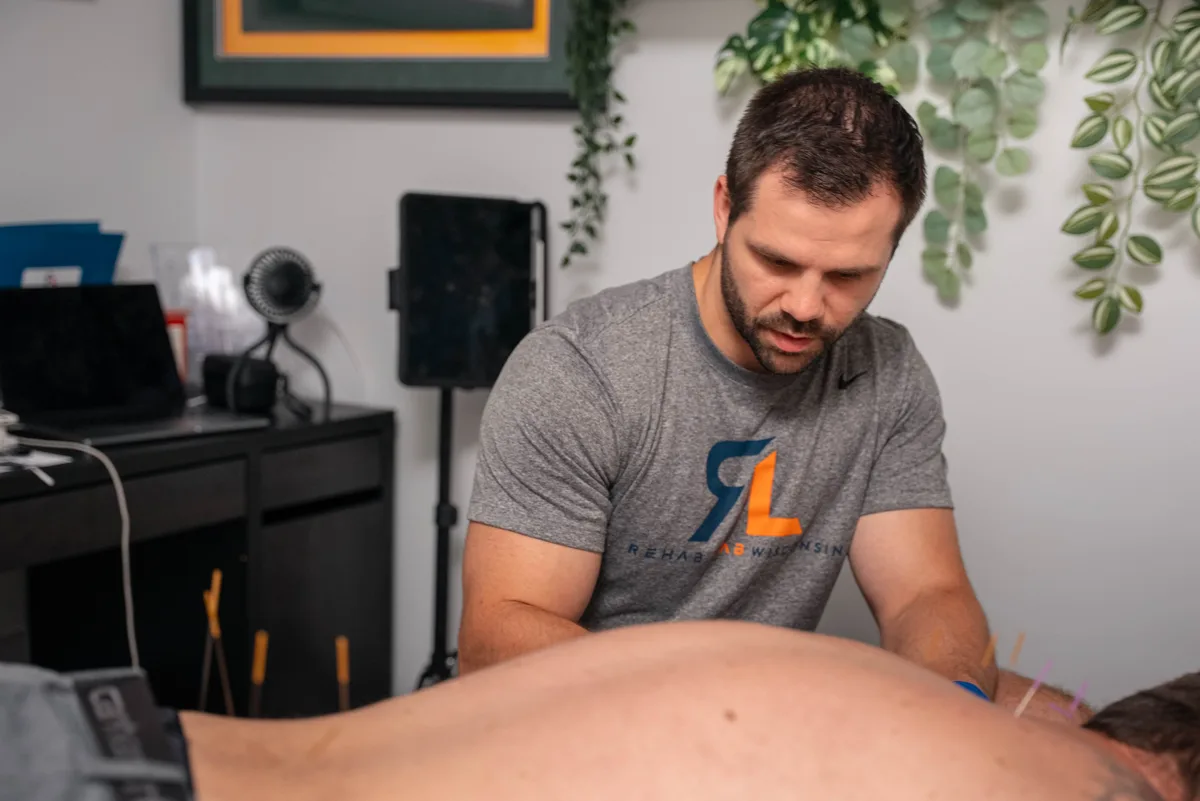
By restoring motion to those upper-neck joints and releasing the muscles at the base of the skull, frequently with dry needling, we can take pressure off the system that is triggering your headaches. We treat this as part of broader neck care.

How we help

  • Gentle adjustments and mobilization for the upper neck
  • Dry needling at the base of the skull for tension headaches
  • Cupping and soft-tissue work for the upper back and neck
  • Posture and habit changes to reduce the daily triggers
Good to know

Migraine & Headache Relief questions

Can a chiropractor really help migraines?

When your headaches have a neck-driven component, which is very common, treating the neck can meaningfully reduce how often and how hard they hit. It is not a cure for every type of headache, so we assess first and are honest about whether we can help yours.

How will I know it is working?

We track headache frequency and intensity over your first few weeks. If we are on the right driver, you should see the pattern ease. If not, we adjust the plan or help you find the right specialist.

How can neck treatment affect a migraine?

The upper cervical joints share nerve pathways with the structures that register head pain, so irritation there feeds into the same system a migraine runs on. Treating it will not change every migraine, but for the substantial share of patients whose headaches have a genuine cervical contribution, it changes the frequency.

Is my headache a migraine, a tension headache, or coming from my neck?

They overlap and they are treated differently, so sorting it out is the first job. Cervicogenic headache is typically one-sided, starts at the base of the skull and is reproducible by loading the neck; migraine more often brings nausea, light sensitivity and a throb. We assess rather than assume.

How long before I know whether this is working?

We would expect a change in headache frequency or intensity within three to four weeks. That is the honest checkpoint. If nothing has shifted by then, continuing to treat the neck is not the right plan and we will say so rather than book you for another block.

Can you help if I am already on migraine medication?

Yes, and we work alongside it rather than asking you to change it. Medication decisions belong with your physician. Many patients use this to reduce how often they need to reach for medication, which is a reasonable goal to aim at.

Which headache symptoms need a doctor rather than a chiropractor?

A sudden severe headache unlike any you have had, one with fever, a stiff neck, visual loss, weakness, confusion or after a head injury needs urgent medical assessment, not an appointment with us. We screen for these and will send you on immediately if anything in your history warrants it.

Ready to fix the cause, for good?

Book at our Wauwatosa or Appleton clinic and get a real plan from a doctor who treats you like a teammate.

Locations

Wauwatosa · Appleton · No referral needed