Condition

Disc Degeneration

Targeted spinal care to manage disc degeneration symptoms and slow the progression.

Locations
Disc Degeneration at Rehab Lab

Disc degeneration is normal wear in the cushions between your vertebrae. Almost everyone develops some with age, and plenty of people have it on a scan without any pain at all. When it does cause symptoms, stiffness, achiness, or nerve pain, the goal is to manage it well and keep you moving, not to panic about the image.

We focus on what actually helps degenerative discs: keeping the spine mobile, taking load off the irritated level, and building the strength that supports it so day-to-day life stops aggravating it.

A worn disc is not a life sentence

The scariest part of disc degeneration is often the report, words like "degenerative" and "bulging" sound alarming. But these findings are extremely common and frequently painless. How your spine moves and how strong it is matter far more for your symptoms than the picture does.

We treat the person, not the MRI. By restoring motion, calming irritated tissue, and strengthening the area, most people get their life back even with wear on the scan. When nerve pain is involved, we treat it like sciatica.

How we help

  • Gentle spinal care to keep the segment moving
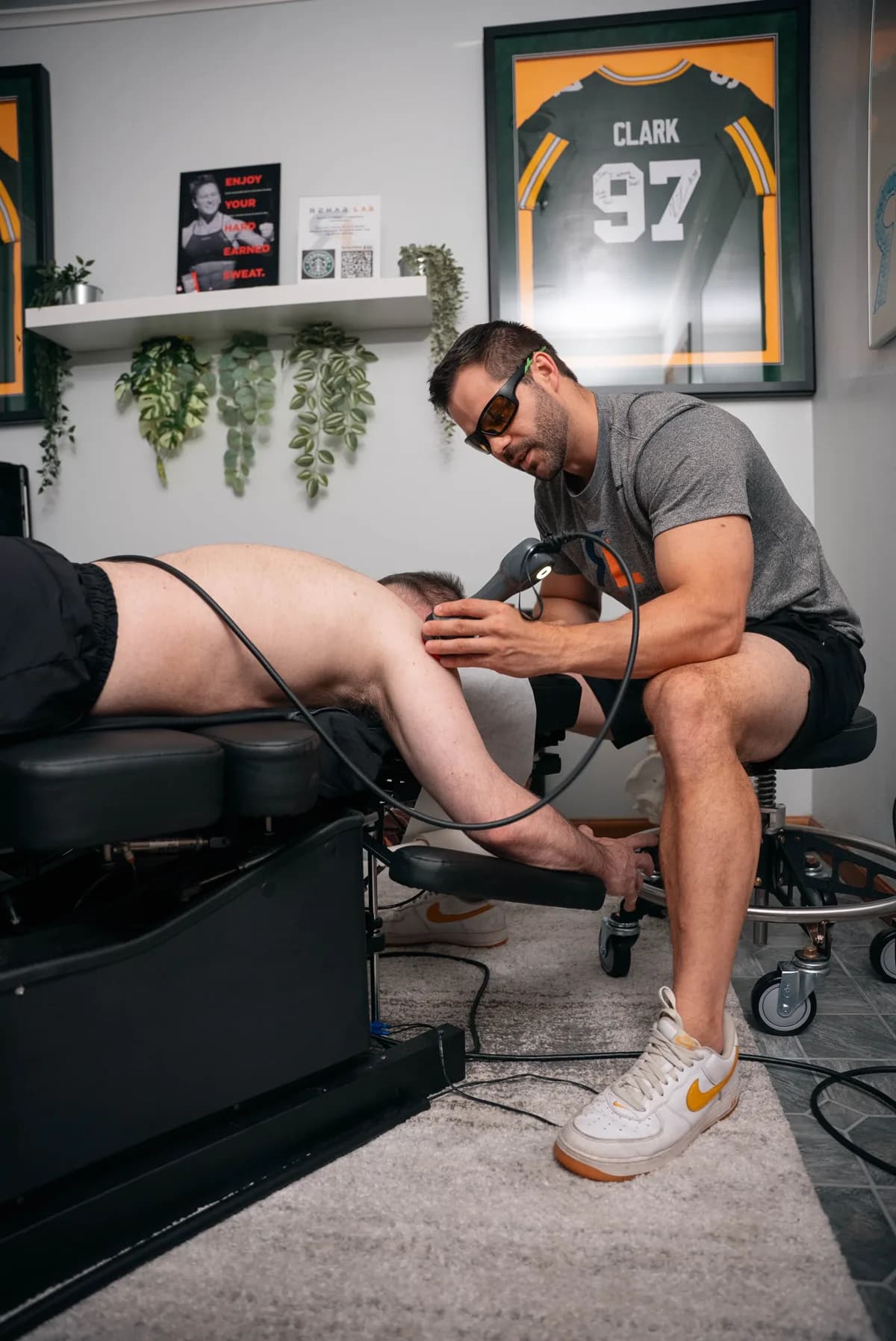
  • Soft-tissue work and laser to settle flare-ups
  • Core and hip strengthening to share load off the disc
  • Practical changes to how you sit, lift, and sleep
Good to know

Disc Degeneration questions

Can chiropractic care reverse disc degeneration?

No honest provider can reverse the wear itself. What we can do is reduce your symptoms, improve how the area moves and loads, and keep the condition from controlling your life. Many people become pain-free without the disc looking any different.

Is it safe to be adjusted with disc problems?

In most cases, with the right technique, yes. We tailor the approach to your exam, often using gentler, low-force methods around an irritated level. Safety drives the plan.

Can a herniated disc heal on its own?

Frequently, yes. Herniated material commonly reduces over months as the body resorbs it, and symptoms often improve well before the imaging changes. That is the reason conservative care is the first line: the aim is to control symptoms and restore function while that natural process runs.

Does a bulging disc mean I should stop exercising?

No, though what you do needs adjusting. Repeated end-range flexion under load is the thing to modify; walking, appropriate strength work and controlled loading are usually beneficial. Complete rest tends to leave you weaker with the same disc.

What is the difference between a bulge, a herniation and degeneration?

A bulge is a broad outward push of the disc wall, a herniation is inner material escaping through it, and degeneration is age-related loss of disc height and water content. All three are common in people with no pain at all, which is why what you feel and how you move matters more than the word on the report.

Is spinal decompression or traction useful for disc problems?

It can help some presentations as part of a plan, and we use flexion-distraction where it suits the case. What we would avoid is selling a fixed block of decompression sessions as the whole answer, because the strength and motion work around the segment is what determines whether relief lasts.

How long does disc-related pain take to settle?

Acute symptoms often ease substantially in two to six weeks with appropriate care, though it is normal for the last of the leg symptoms to linger. Longstanding cases take longer. We will tell you early if your response is not tracking as it should.

Ready to fix the cause, for good?

Book at our Wauwatosa or Appleton clinic and get a real plan from a doctor who treats you like a teammate.

Locations

Wauwatosa · Appleton · No referral needed