Condition

Knee Pain

Runner’s knee, meniscus, and arthritis pain managed with care that treats the whole leg.

Locations
Knee Pain at Rehab Lab

Knee pain is often the knee paying for something happening above or below it. A weak hip lets the knee cave inward, a stiff ankle changes how you land, and the knee absorbs the difference. That is why treating only the knee so often fails.

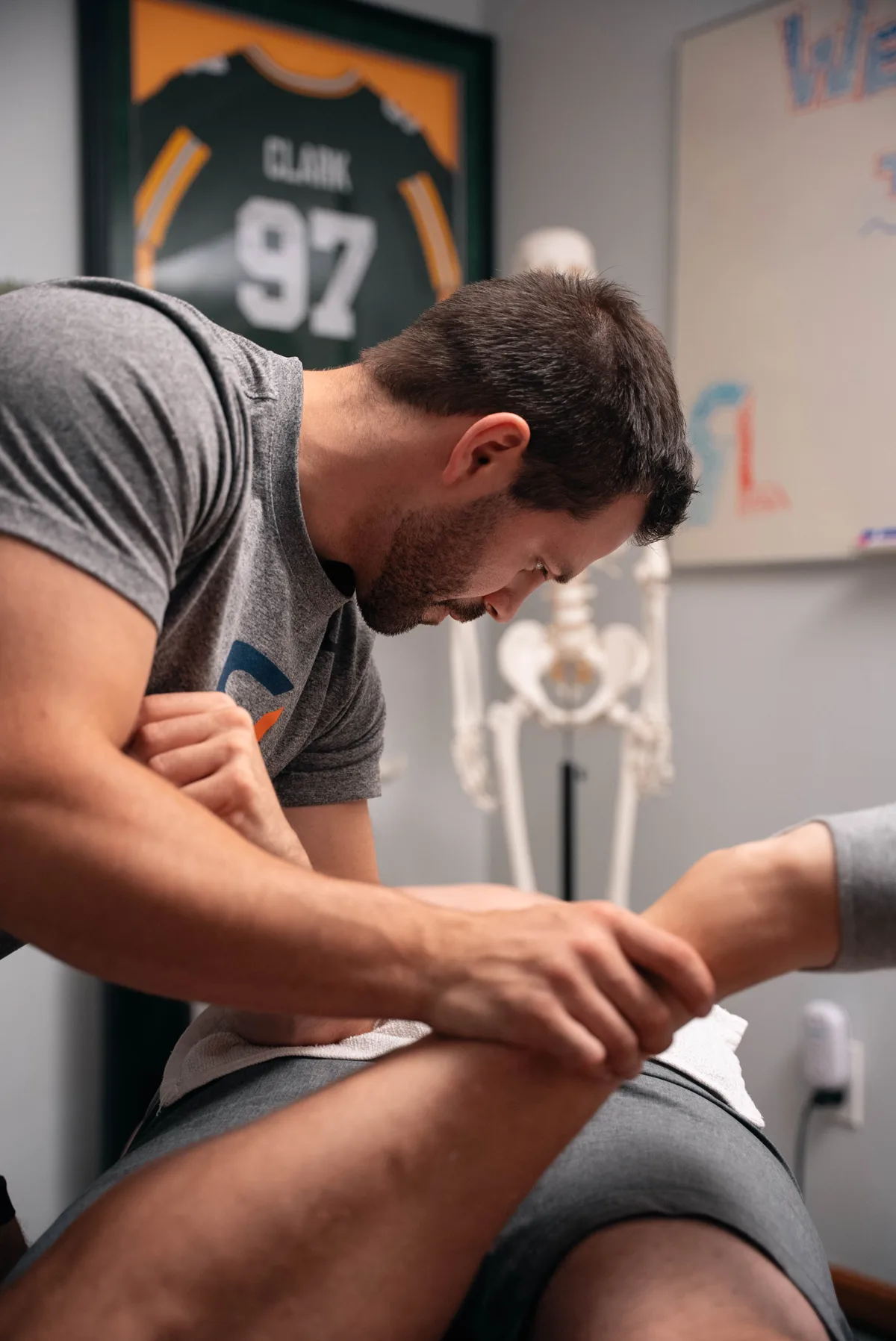
We assess the whole leg, hip, knee, and ankle, treat the painful tissue, and fix the strength and movement problems that put the load on your knee in the first place.

Looking above and below the knee

Runner’s knee, IT band pain, and kneecap tracking problems are usually driven by hip and glute weakness that lets the leg collapse inward with every step. Treat the knee alone and the pattern keeps reloading it.

So we build hip and glute strength and clean up how you move, alongside hands-on care and modalities for the sore knee itself. For arthritic knees, the same approach, strength plus laser to settle inflammation, keeps people active and comfortable.

How we treat knee pain

Good to know

Knee Pain questions

Can you help knee arthritis without surgery?

Often, yes. Strengthening the muscles around an arthritic knee, improving how you move, and settling inflammation can reduce pain a great deal and keep you active. It will not regrow cartilage, but many people delay or avoid surgery and feel far better.

Is it safe to keep running with knee pain?

It depends on the cause and how it responds. We often keep runners running with modifications while we fix the driver, rather than stopping you cold. We will give you a clear answer for your specific knee.

Does knee pain always mean the knee is the problem?

No, and frequently it is not. The knee sits between the hip and the ankle and takes the consequences when either stops doing its job. A stiff ankle or a weak hip changes how the knee tracks under load, which is why we assess above and below before treating the joint itself.

Is it true that running wears out your knees?

The evidence does not support it. Recreational runners generally show lower rates of knee arthritis than sedentary people, because cartilage responds well to regular loading. What causes problems is a sudden jump in volume or intensity on legs that are not prepared, which is a dose problem rather than a running problem.

Can anything be done for bone-on-bone arthritis?

Yes, more than most people are told. Arthritis is not reversible, but pain and function both respond substantially to restoring motion above and below, offloading the joint and building genuine strength around it. We also use laser and shockwave for degenerative cases.

Why does my knee hurt more going downstairs than up?

Because descending loads the quadriceps and the front of the knee eccentrically, meaning the muscle lengthens under load, which is the most demanding kind of contraction. Pain that is clearly worse on descent usually points to quadriceps and hip strength that has not kept up, which is treatable.

Should I get an MRI or an x-ray for my knee?

Often neither, at least not first. A history and exam identifies most knee problems and tells us whether imaging would change anything. Scans in adults over 40 very commonly find meniscal changes that are not the cause of pain, which can send treatment in the wrong direction.

Ready to fix the cause, for good?

Book at our Wauwatosa or Appleton clinic and get a real plan from a doctor who treats you like a teammate.

Locations

Wauwatosa · Appleton · No referral needed