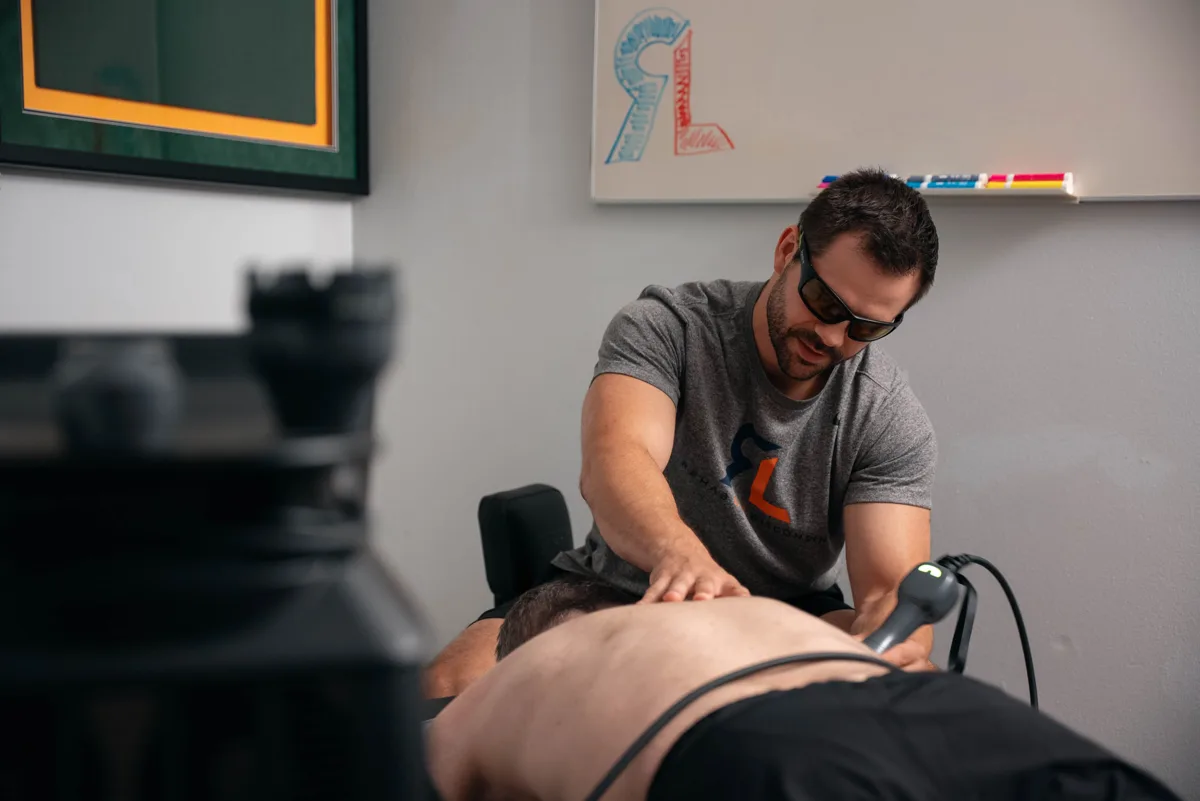
Manual Therapy

Spinal Care

Whole-spine care for alignment, mobility, and nerve health, built around how you actually move.

Locations
Spinal Care at Rehab Lab

Spinal care looks at your whole spine as one system, not a stack of separate joints. When one segment stops moving, the segments above and below take the extra load. Over time that is how a tight mid-back turns into neck pain, or a stiff low back turns into hip trouble.

We assess how your spine moves from top to bottom, restore the segments that are stuck, and calm the nerves those restrictions irritate. Then we teach your spine to hold the change with targeted strength work.

Why the whole spine matters

Pain rarely shows up where the problem started. A locked-up rib joint can read as shoulder pain. A stiff lower back can be the reason your neck never stays loose. If we only chase the sore spot, you keep coming back.

Reading the full chain is what lets us treat the cause. That is the same thinking behind how we handle back pain, neck pain, and sciatica.

How we care for your spine

  • A full movement screen of your spine and the joints that load it
  • Targeted adjustments to the segments that are actually restricted
  • Soft-tissue work and dry needling for the muscles guarding the area
  • Strength and mobility work so the spine holds its new range
Good to know

Spinal Care questions

Is spinal care only for back pain?

No. Healthy spinal motion affects headaches, neck tension, rib and shoulder mechanics, and how well you move in the gym. Plenty of patients come in for one thing and notice three others improve.

Will I need x-rays?

Only if your history or exam points to a reason for them. We do not image everyone by default. If imaging will change your plan, we will explain why and make sure you get the right scan for it.

Do I need x-rays before treatment?

Not usually. Most spine complaints are diagnosed from your history and a hands-on movement exam, and imaging a normal spine often shows age-related changes that have nothing to do with your pain. We order or refer for imaging when something in your history or exam warrants it, and we will explain why.

Does a degenerative disc on a scan mean my spine is failing?

No. Disc degeneration is extremely common in people with no pain at all, which is why a scan finding on its own explains very little. What matters is how the segment moves and how well the surrounding muscles support it, and both of those are things we can change.

Can spinal care help if I have already had surgery?

In many cases, yes, and we see a steady stream of post-surgical patients. The fused or operated segment itself is off limits, but the levels above and below it are usually taking extra load and are exactly where treatment helps. We will want to know what was done and when before we touch anything.

How long does a course of spinal care take?

Straightforward cases often resolve in four to six weeks of combined hands-on care and rehabilitation. Longstanding problems with significant strength loss take longer. We set milestones at the start and test progress objectively, so you are not guessing whether it is working.

Is there an end to the plan?

Yes. Milestones are agreed at the first visit and you graduate out when you hit them. If you want to come back periodically once you are discharged that is your call, but it is not a requirement and we will not build the plan around it.

Ready to fix the cause, for good?

Book at our Wauwatosa or Appleton clinic and get a real plan from a doctor who treats you like a teammate.

Locations

Wauwatosa · Appleton · No referral needed