
Search “chiropractor in Wauwatosa” and you will find a dozen clinics inside a few square miles, all describing themselves in nearly the same words. The differences that actually matter to your recovery are not on the homepage. This guide explains what separates sports chiropractic from general chiropractic, what to ask before you book, and how to tell whether a clinic is built to get you finished or built to keep you scheduled.
What makes a clinic “sports chiropractic” rather than general chiropractic?
Nearly every chiropractor adjusts joints. The difference in a sports-focused clinic is what happens on either side of the adjustment. Sports chiropractic starts with a movement assessment, because the goal is not only to relieve the painful joint but to find out why that joint got overloaded in the first place, which is often somewhere else entirely. It ends with loading the tissue back up, so the fix survives contact with your actual training, job, or season.
That difference shows up in the toolbox. A sports clinic typically pairs adjustments with hands-on soft-tissue work such as Active Release Technique or Graston, then layers in corrective exercise to rebuild capacity. Care is measured in milestones toward a specific goal, whether that is back to running, back to lifting, or back to the field, rather than in open-ended visits.
You do not have to be an athlete for this to be the right model. The same approach that returns a college pitcher to the mound is what returns a desk-bound patient to a pain-free commute. The label refers to the method, not the clientele.
Six questions worth asking before you book
- Who will actually treat me, and will it be the same person every visit? In some clinics the doctor performs a brief adjustment and hands you off to a tech or a table for the rest. Ask directly whether you see a licensed chiropractor for the full appointment, every time.
- Do you assess how I move before you treat? A clinic that treats the spot that hurts without watching you squat, hinge, reach, or step will keep treating that spot. Ask what the first visit includes.
- How do you measure whether I am getting better? “How does it feel today?” is a starting point, not a measurement. Ask whether the clinic tracks anything objective, such as strength, range of motion, and side-to-side symmetry, and whether you get to see those numbers.
- What does the plan look like, and when does it end? A good answer is specific: a range of visits, a set of milestones, and a description of what discharge looks like. A vague answer, or one that begins with a long prepaid package, is worth pausing on.
- What happens if I am not the right fit for chiropractic care? The honest answer is that some cases belong with an orthopedist, a surgeon, or a specialist. Ask what triggers a referral out. A clinic that has never met a case it could not treat is telling on itself.
- Will I be given something to do between visits? Recovery happens mostly outside the treatment room. If the plan is entirely passive, meaning adjustments, tables, and machines, the gains tend to fade between appointments.
You do not need to run all six past a receptionist. Most of them are answered by how a clinic handles your first phone call and your first visit.
What makes Wauwatosa a particular case
Wauwatosa is unusually dense with health care. The regional medical campus around Froedtert and the Medical College of Wisconsin sits right here, which means most Tosa patients have easy access to orthopedics, imaging, and hospital-based physical therapy. That is genuinely useful, and it also means a lot of people land in a specialist queue for a problem that conservative care could have handled sooner and with less waiting.
We covered that decision in full in when to try conservative care before an orthopedist. It also means the choice is rarely “chiropractor or nothing.” It is usually “start conservative, or start with a specialist referral and a six-week wait.” For most non-emergency musculoskeletal complaints, such as a low back that seized up, a shoulder that has been nagging since spring, or a knee that only hurts on stairs, starting conservative is the reasonable first move, provided the clinic knows when to escalate.
The other local factor is how active the area is. Between the running community, the rec leagues, the high school programs at Wauwatosa East and West, and a metro full of desk jobs and long winters, the injury mix here is specific: overuse from spring ramp-ups, shoveling and ice-slip injuries in the winter, and a steady baseline of stiff, desk-bound necks and low backs. A clinic that sees that mix all day is faster at recognizing it.
Red flags worth taking seriously
- A long treatment plan quoted before any assessment. A number of visits can only be estimated after someone has examined you. Quoted first, examined second, is backwards.
- Large prepaid packages with a discount for paying up front. Prepayment is not automatically wrong, but a plan priced to make leaving expensive deserves scrutiny.
- X-rays for every new patient regardless of presentation. Imaging is valuable when the history or exam calls for it. Routine imaging of everyone who walks in is not the same thing.
- Care that never changes. If visit twelve looks identical to visit two, nothing is progressing. You are being maintained, not treated.
- No exit conversation. If nobody has described what “done” looks like for you, ask. If there is still no answer, that is your answer.
What a good first visit should actually include
Expect to spend most of the appointment being evaluated rather than treated. A thorough first visit covers your history, meaning what happened, what makes it worse, and what you are trying to get back to, followed by an exam of how you actually move rather than only where you are tender. Orthopedic and neurological testing is used where it fits, and hands-on assessment identifies which tissues and joints are involved. We walk through the full sequence in what actually happens at a first visit.
You should leave with three things: a plain-language explanation of what is going on, a plan with a rough timeline and defined milestones, and something to do before the next visit. Treatment usually begins on day one, but it should follow the assessment rather than replace it.
How Rehab Lab is set up in Wauwatosa
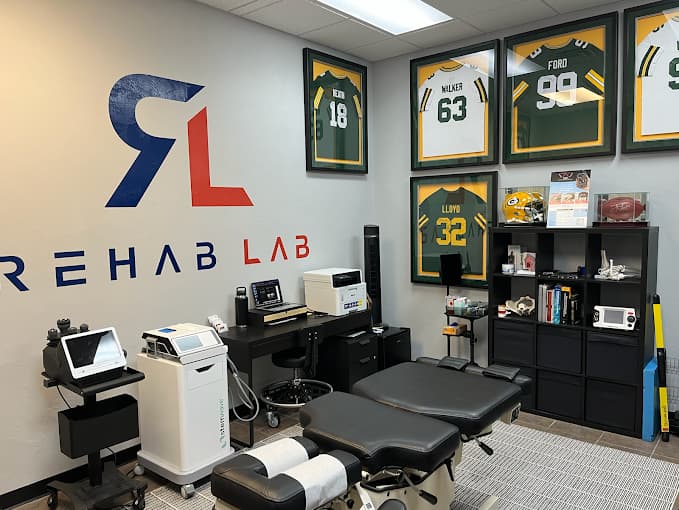
Rehab Lab is a sports chiropractic and rehab clinic at 11707 W Dearbourn Ave Ste B, on the far west edge of Wauwatosa near Highway 100. Rehab Lab was founded by Dr. Sam Wagner, a board-certified sports physician who moves between both clinics and sees patients by application only, and you are treated by a licensed Doctor of Chiropractic at every visit rather than handed off.
Every plan starts with a movement assessment and pairs hands-on care with rehab, because an adjustment that is not backed by strength work tends not to hold. For cases that need more than hands, the clinic has shockwave therapy, Class IV laser, dry needling, and ARP neuro therapy. Progress is tracked with objective testing, so improvement is something you can see rather than something you are told.
There is also a finish line. Milestones are set at the start and you graduate out when you hit them. If a case turns out to belong with an orthopedist or another specialist, we say so and point you there. You can see the full clinic details on our Wauwatosa page or get in touch at (414) 356-0414.
Frequently asked questions
Do I need to be an athlete to see a sports chiropractor?
No. Sports chiropractic describes the method, meaning assess how you move, treat the cause, and rebuild strength. It does not describe the patient. Most people we treat are not competitive athletes. They are people with desk jobs, physical jobs, weekend training, or a nagging injury they want gone.
Do I need a referral to see a chiropractor in Wisconsin?
Chiropractors are licensed primary-contact providers in Wisconsin, so you can generally schedule directly without a physician referral. If your insurance plan has its own referral requirements, it is worth confirming those before your first visit.
How many visits should I expect?
It depends on whether the problem is acute or long-standing, but you should be given a range and a set of milestones at the start rather than an open-ended schedule. If a clinic cannot describe what finishing looks like, ask again.
What is the difference between a sports chiropractor and a physical therapist?
A chiropractor leads with restoring joint motion and reducing pain so you can move; a physical therapist leads with rebuilding strength and capacity so the problem stays gone. Good care usually needs both, which is why clinics that combine adjustments and rehab tend to be efficient. We cover this in more detail in our guide on chiropractic vs. physical therapy.
What should I ask a clinic before booking?
Ask who treats you at each visit and whether it is the same person, whether the plan includes rehabilitation or only adjustments, how progress will be measured, and what the discharge criteria are. A clinic that cannot answer the last one is not planning to discharge you.
Is a longer treatment plan a warning sign?
Not by itself, because genuinely complex cases take time. What matters is whether the plan has milestones and an end point, and whether those were explained before you paid. A plan with no defined finish, and no way to tell whether it is working, is the pattern worth avoiding.